Introduction to LangGraph
LangGraph is a key extension library in the LangChain ecosystem, specifically designed for building, managing, and deploying long-running, stateful, multi-agent complex workflows. It manages task flows via a graph structure, supporting loops, conditional branches, and dynamic decision-making, suitable for scenarios requiring persistent context or multi-agent collaboration.
- Persistent Execution: Has disaster recovery capabilities, can run for long periods, and automatically resume from the interruption point when issues occur.
- Human-in-the-loop: Allows seamless introduction of human supervision at any time during execution by inspecting and modifying agent state.
- Comprehensive Memory: Agents possess both short-term working memory for continuous reasoning and long-term persistent memory across sessions.
Core Architecture and Concepts
1. State Machine Architecture
- LangChain = Linear tasks (e.g., Q&A, document processing)
- LangGraph = Complex tasks (e.g., agent collaboration, dynamic flows, human-in-the-loop)
2. Core Components
Graphs: Define the logical flow of task execution, composed of nodes and edges.
- Which steps are included (Nodes)
- How these steps connect (Edges)
- The direction of the entire flow
State: A shared data container running through the entire graph execution process, with a user-defined structure, recording the current program status.
- Stores current information and data
- Shared among all nodes
- Can be read and updated by any node
Nodes: The basic execution units of the graph, essentially functions that receive State as input and return updated State.
- Each node is responsible for completing a specific task
- Receives current state as input
- Returns updated results after processing
- Essentially a Python function
Edges: Control the flow logic between nodes, divided into normal edges and conditional edges.
- Normal Edges: Fixed route, always go to B after A finishes.
- Conditional Edges: Choose route based on situation, like "If... go to A, else go to B".
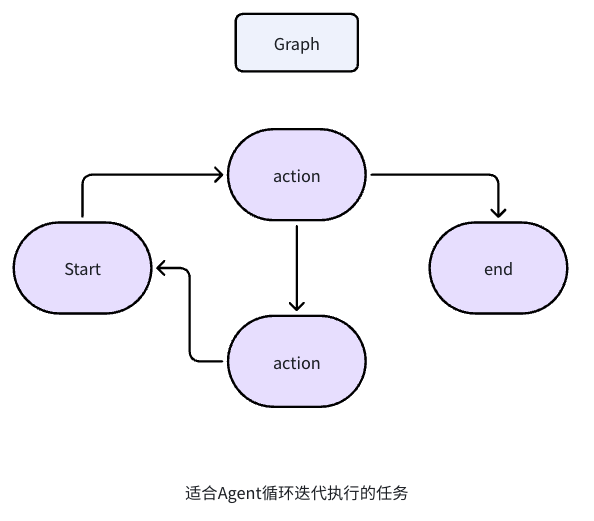
Key Features
Loop and Branching Capabilities
- Supports conditional statements and loop structures
- Can dynamically determine execution paths based on state
- Easily implements complex conversation flow control
State Persistence
- Automatically saves and manages state
- Supports pausing and resuming execution
- Facilitates handling long-running conversations
Human-in-the-loop Support
- Can insert manual review during execution
- Supports editing and modifying state
- Flexible interaction control mechanisms
Multi-Agent Collaboration
Achieved through "state-driven graph structure":
- Clear responsibility boundaries
- Reliable communication protocols
- Observable runtime platform
- Architecture design
Architecture design
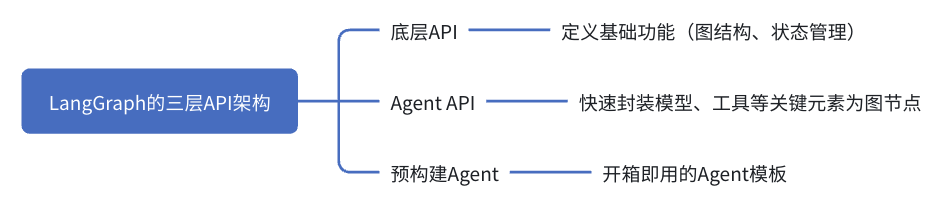
Application Scenarios
Fast Fashion E-commerce Smart Customer Service
- Intent recognition agent determines user issue type
- Dynamically routes to specialized agents based on intent
- Calls MCP tools to handle complex business logic
Multi-turn Conversation State Management
In multi-turn conversation systems, user needs often span multiple stages. LangGraph's state-driven graph structure can:
- Break down each conversation stage into independent nodes
- Explicitly manage state info like intent, order details, compensation levels, etc.
- Automatically route requests based on real-time context
Agent Systems
- Robotic control systems
- Autonomous vehicles
- Video game AI
- Chatbots
Technical Advantages
Compared to Traditional LangChain
- Explicit State Management: Each node only cares about the part of the state it handles, reducing coupling.
- Dynamic, Flexible Agent Routing: Highly personalized execution paths via conditional edges and loop structures.
- Easy to Extend and Maintain: Adding nodes or adjusting routes requires only local changes.
- Supports Complex State Transition Logic: Whether for multi-turn dialogue, conditional reasoning, or long-process tasks.
Engineering Support
- Visualization: Provides built-in graph visualization methods to intuitively display workflow logic.
- Debug Friendly: State flows between nodes and updates continuously, making it easy to track and debug.
- Persistent Execution: Supports checkpoint mechanisms to recover after failures.
For more details, see LangGraph Docs